
Mental health affects how you think, feel, and handle daily life. It is not only about serious problems. Many people work, study, and manage tasks but still feel tired, stressed, or empty inside. This often goes unnoticed.
You can look “fine” on the outside and still feel overwhelmed on the inside. Stress builds quietly, especially in busy and always-online lives. That is why mental health tips matter. Small daily habits can protect your mind before stress turns into burnout. You do not need big changes—just simple, realistic actions.
This guide shares clear and practical mental health tips you can use every day. The focus is progress, not perfection.
What Does Good Mental Health Mean Today?
Good mental health does not mean feeling happy all the time. It means balance, awareness, and the ability to cope with challenges.
Mental Health vs. Mental Wellness
Mental health is your emotional state. Mental wellness is how you care for it daily. Stress, sadness, or nervousness are normal. What matters is how you respond and recover.
Signs Your Mental Health Needs Attention
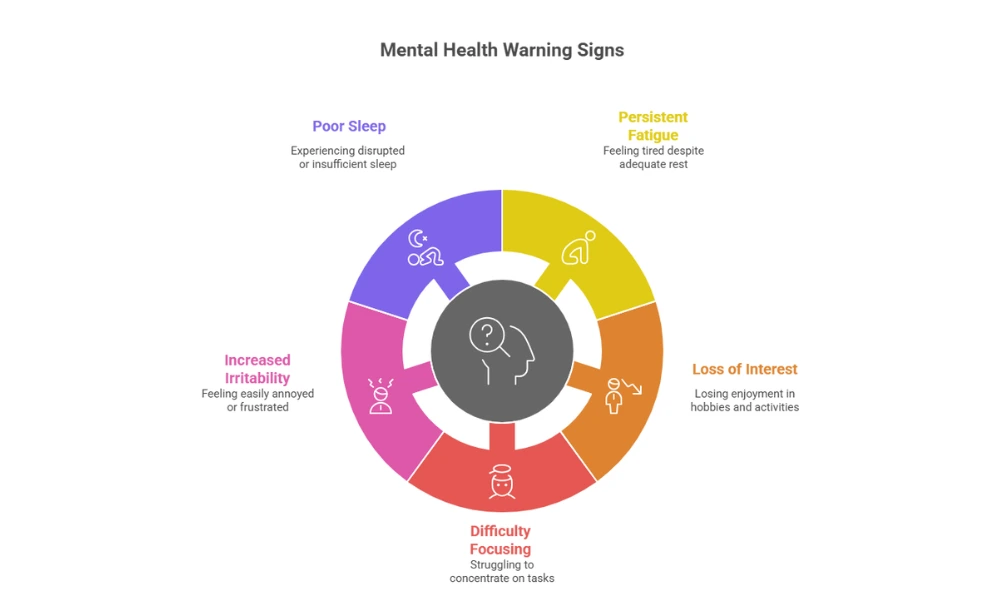
Mental health issues are not always obvious. Common signs include:
- Feeling tired even after resting
- Losing interest in things you enjoy
- Trouble focusing
- Feeling more irritable
- Poor sleep
Why Mental Health Tips Matter Today
Modern life creates constant pressure. Messages, deadlines, comparisons, and uncertainty can drain mental energy over time.
Everyday Stressors
- Always being online
- Work or school pressure
- Social media comparison
- Little time to rest
- Worry about the future
These small stresses add up. Mental health tips help reduce the load and bring back control.
Ignoring Mental Health Has Costs
When mental health is ignored, focus drops, patience fades, and motivation weakens. Relationships and energy can suffer.
Caring for mental health improves focus, emotional balance, and resilience. Stress will always exist, but with the right habits, you can handle it better. That is why daily mental health care is essential.
15 Simple Mental Health Tips You Can Start Today
These mental health tips are not complex. They are small actions you can repeat daily. When done often, they protect your emotional balance and reduce stress over time.
1. Create a Basic Daily Routine
A simple routine gives your mind structure. You do not need a strict schedule. Just wake up, eat, work, and rest around the same time each day.
Routine lowers anxiety because your brain knows what comes next. It also saves mental energy for important tasks.
Mistake to avoid: Trying to plan every minute. Keep it flexible.
2. Protect Your Sleep First
Sleep affects mood, focus, and patience. Poor sleep often makes stress feel worse than it is.
Aim for a calm bedtime routine. Lower screen use before sleep. Keep your room dark and quiet when possible.
Real example: Many people feel “emotionally better” after fixing sleep—even before changing anything else.
3. Practice Simple Mindfulness
Mindfulness does not mean long meditation. It can be as simple as taking three slow breaths or noticing your surroundings.
This habit helps your brain pause instead of reacting fast to stress.
Tip: Try mindfulness during daily tasks like walking or washing hands.
4. Move Your Body Gently
Movement supports mental health. You do not need intense exercise. Walking, stretching, or light activity is enough.
Movement releases stress and improves mood naturally.
Avoid: Exercising only for appearance. Focus on how it makes you feel.
5. Set Clear Boundaries
Boundaries protect your mental energy. This includes work hours, messages, and personal time.
Saying “not now” is not rude. It is healthy.
Example: Stop checking work messages after a set time each day.
6. Reduce Screen and Social Media Time
Too much screen time can increase stress and comparison. Limit how often you check social platforms.
Even small breaks help your mind reset.
Helpful habit: No phone during meals or before sleep.
7. Stay Connected With People You Trust
Talking to someone you trust can reduce emotional pressure. You do not need deep talks every time.
Simple check-ins matter.
Reminder: Quality matters more than quantity.
8. Be Kinder to Yourself
Many people are harder on themselves than on others. Notice your self-talk.
Replace harsh thoughts with balanced ones.
Example: Change “I failed” to “I’m learning.”
9. Eat to Support Your Mood
Food affects energy and focus. You do not need strict diets.
Eat regular meals. Include fruits, vegetables, and enough water.
Avoid: Skipping meals when stressed.
10. Learn One Stress-Reset Skill
Have one quick way to calm down. This could be breathing, stretching, or stepping outside.
Use it when stress rises, not after it becomes too heavy.
11. Write Things Down
Writing helps clear your mind. You do not need long journaling.
Write worries, plans, or feelings briefly.
Tip: Write before sleep to reduce mental noise.
12. Spend Time Outside
Nature helps your nervous system relax. Even short outdoor time helps.
Sunlight and fresh air support mood and focus.
13. Allow Yourself to Rest
Rest is not a reward. It is a need.
Mental fatigue builds when rest is ignored.
Sign you need rest: Constant irritation or low motivation.
14. Ask for Professional Support When Needed
Support from a counselor or mental health professional can help when stress feels unmanageable.
Seeking help shows strength, not weakness.
15. Focus on Progress, Not Perfection
Mental health improves slowly. Some days will feel easier than others.
Track small wins. Consistency matters more than doing everything “right.”
Mental Health Tips Based on Your Lifestyle
Different lifestyles bring different mental pressures. These tips adjust easily to real life.
Mental Health Tips for Busy Professionals
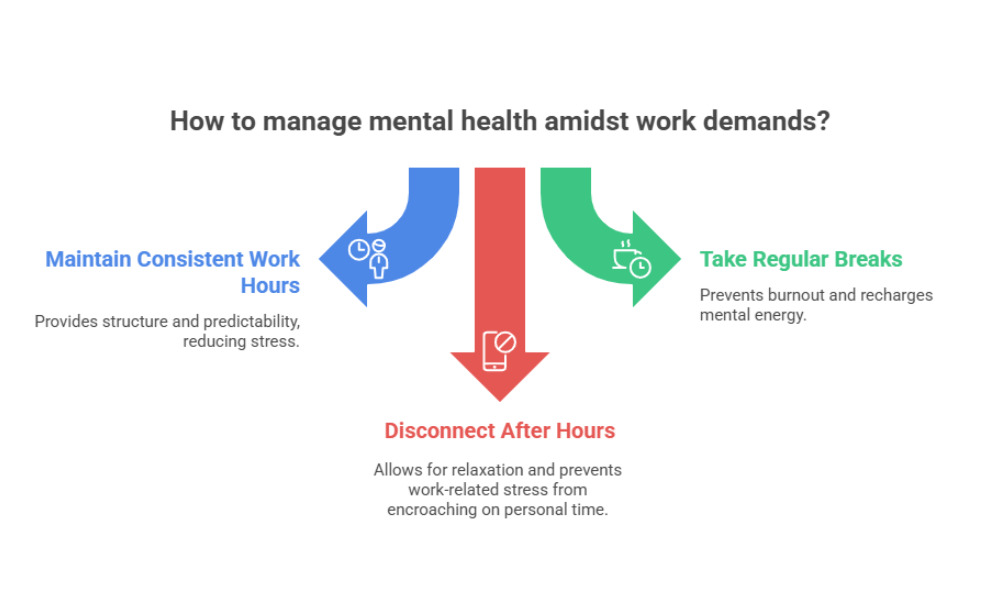
Long hours and deadlines can drain mental energy.
Helpful habits:
- Start and end work at the same time each day
- Take short breaks every 60–90 minutes
- Avoid checking work messages after hours
Mental Health Tips for Students
Students often face pressure to perform and compare.
Helpful habits:
- Study in short sessions
- Sleep before exams instead of cramming
- Talk to someone when stress builds
Learning works better when the mind is calm.
Mental Health Tips for Remote Workers
Working from home can blur boundaries.
Helpful habits:
- Create a clear work space
- Change clothes after work hours
- Step outside daily
These habits separate work life from personal life.
Mental Health Tips for Parents and Caregivers
Caring for others often means ignoring your own needs.
Helpful habits:
- Ask for help when possible
- Take short personal breaks
- Lower unrealistic expectations
Caring for yourself helps you care for others better.
Healthy vs Unhealthy Coping Habits
| Healthy Habits | Unhealthy Habits |
| Talking about stress | Hiding emotions |
| Regular sleep | Irregular sleep |
| Taking breaks | Working nonstop |
| Asking for help | Avoiding support |
| Balanced routine | No structure |
This comparison illustrates how small choices can impact mental health over time.
Pros and Cons of Daily Mental Health Habits
Pros
- Better emotional balance
- Improved focus and patience
- Stronger relationships
- Less long-term stress
Cons
- Requires daily effort
- Results take time
- Progress is not always visible
The benefits grow with consistency.
Key Takeaways
- Mental health needs daily care
- Small habits create lasting change
- Stress is normal, support helps
- Rest and routine protect well-being
- Progress matters more than perfection
Conclusion: Make Mental Health a Daily Priority
Mental health does not improve overnight. It grows through small, steady habits. You do not need to change your whole life. Start with one or two tips that feel manageable.
Some days will feel easier than others. That is normal. What matters is staying kind to yourself and continuing forward. When mental health becomes part of your daily routine, life feels more balanced and manageable.
FAQ
1. 5 Ways to Improve Mental Health
Improving mental health starts with simple daily actions such as getting enough sleep, staying physically active, eating nutritious food, sharing emotions with trusted people, and allowing time to rest and relax.
2. How to Keep Good Mental Health
Good mental health can be maintained by following a healthy routine, building strong social connections, managing stress early, practicing gratitude, and seeking support when challenges feel overwhelming.
3. How to Beat Stress Naturally
Stress can be reduced by practicing deep breathing, breaking large tasks into smaller steps, exercising regularly, limiting screen time, and engaging in enjoyable or calming activities.
4. What Is Mental Health Care?
Mental health care refers to the combination of self-care habits, emotional support, counseling, and professional services that help individuals maintain emotional balance and mental well-being.
5. Top 10 Tips to Maintain Your Mental Health
Maintaining mental health involves proper sleep, healthy eating, regular exercise, open communication, effective time management, mindfulness practice, setting boundaries, reducing social media use, daily relaxation, and asking for help when needed.
6. Habits That Improve Mental Health
Healthy habits such as daily movement, journaling thoughts, practicing meditation, maintaining a consistent sleep schedule, and using positive self-talk can significantly improve mental health over time.
7. Mental Health Tips for Students
Students can protect their mental health by taking regular study breaks, avoiding overwork, staying organized, asking for academic or emotional support, and prioritizing rest.
8. Self-Care Tips for Mental Health
Self-care includes spending time alone when needed, practicing calming activities, eating balanced meals, getting quality sleep, setting personal limits, and showing kindness to yourself.
9. Activities to Improve Mental Health
Activities like walking, playing sports, creative hobbies, spending time with friends, and practicing breathing exercises can improve mood and emotional strength.
10. Mental Health Tips for Work
At work, mental health can be supported by taking short breaks, managing workloads realistically, communicating clearly, setting work-life boundaries, and preventing burnout.
11. Mental Health Tips for Teens
Teens can improve mental health by talking to trusted adults, sleeping 8–9 hours, limiting screen time, expressing emotions safely, and remembering they are not alone.