
Many people feel tired in their mind even after a full night’s sleep. Stress builds slowly. Focus drops. Emotions can feel unstable. Often, this happens because of poor mental balance, not illness.
Mental health affects how you think, feel, and act every day. Modern life keeps people sitting too long and using screens constantly. This can harm emotional well-being.
The benefits of exercise on mental health are real and proven. Moving your body helps the brain release chemicals that improve mood, reduce stress, and support emotional balance. Even simple activities like walking, stretching, or light exercise give these benefits.
By adding small amounts of movement each day, people can feel calmer, more focused, and emotionally stronger. Understanding the benefits of exercise on mental health is a simple step toward long-term mental well-being.
Connection Between Exercise and Mental Health
Exercise and mental health are directly linked. The brain responds to physical movement. When the body stays inactive, the mind feels heavy and tense.
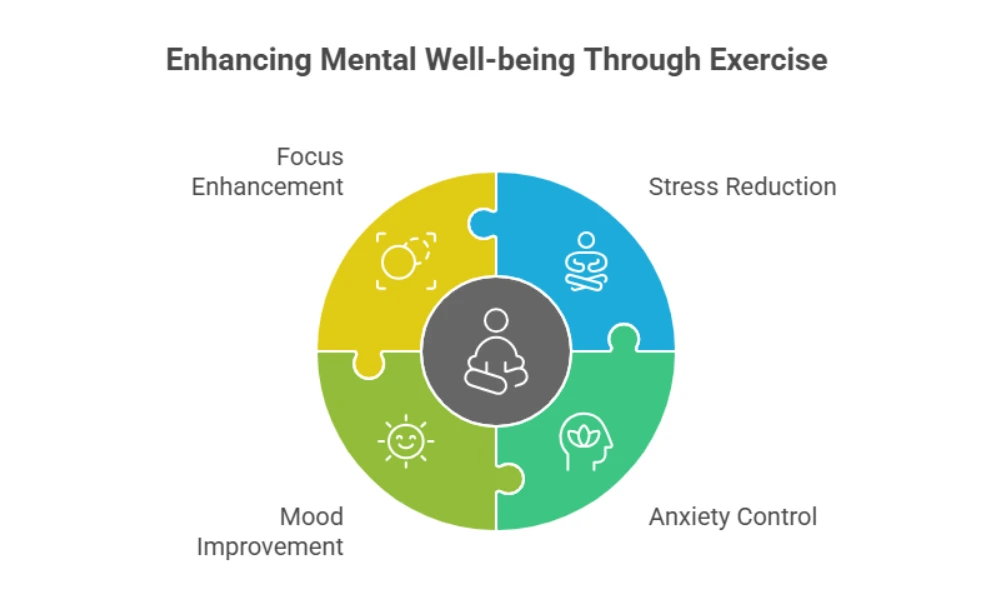
The benefits of exercise on mental health are clear. Regular movement improves blood flow to the brain. It helps control stress, reduces anxiety, and supports emotional balance. Over time, this creates mental stability and makes daily life feel easier.
How Exercise Affects the Brain
Brain Chemicals and Mood
Exercise releases endorphins that reduce stress.
It increases serotonin for emotional balance.
It boosts dopamine for focus and motivation.
Why Inactivity Harms Mental Health
A sedentary lifestyle increases mental strain. Long periods of sitting reduce oxygen to the brain. Muscle tension sends stress signals. Poor movement can disrupt sleep and emotions.
This is why the benefits of exercise on mental health are so important. Regular activity helps release trapped stress, improves mood, and keeps the mind calmer. Even small amounts of daily movement can make a big difference.
Key Benefits of Exercise on Mental Health
1. Reduces Stress
2. Controls Anxiety
3. Improves Mood
4. Improves Focus
Real-Life Experience
Many people continue exercising because it calms their minds. Over time, exercise feels like relief, not effort.
Exercise and Depression Support
Depression often causes low energy, sadness, and loss of interest. Daily tasks feel heavy. Motivation can feel weak.
The benefits of exercise on mental health help break this cycle. Moving your body sends signals to the brain that reduce emotional heaviness over time.
Exercise also creates a daily routine. This simple structure helps people feel more in control. Even light activity, like walking or stretching, can improve mood when done regularly.
Consistency is more important than intensity. Short, gentle sessions are enough to support emotional balance and mental well-being.
How Exercise Improves Sleep Quality
Sleep and mental health are closely connected. Poor sleep can increase stress and make emotions feel stronger.
The benefits of exercise on mental health include better sleep. Moving your body helps set the brain’s activity and rest cycles. This supports deeper, more refreshing sleep.
Regular exercise also reduces mental restlessness. People who move daily often fall asleep faster and wake up feeling more refreshed.
Morning or afternoon activity usually works best. Very intense exercise late at night can sometimes disturb rest
Emotional Recovery Through Exercise
Emotional recovery means being able to relax after stress. Without it, emotions stay tense and heavy.
The benefits of exercise on mental health include helping the body release emotional pressure. Exercise reduces physical tension and calms the nervous system.
Over time, regular movement improves emotional control. People feel less reactive and more balanced during stressful or difficult moments.
Exercise Builds Emotional Resilience
Emotional resilience helps people handle stress without feeling overwhelmed.
Exercise builds this skill gradually. It teaches the mind to handle discomfort and continue calmly.
People who exercise regularly often recover faster from emotional challenges. They feel stronger and more stable under pressure.
Exercise and Self-Confidence
Exercise improves self-confidence in a natural way. Each completed activity builds self-trust. You learn that you can stay consistent. This confidence often spreads into daily life. Decision-making improves. Self-doubt decreases. Confidence from exercise comes from routine, not comparison.
Types of Exercise and Mental Health Benefits
1. Walking and Light Activity
2. Yoga and Stretching
3. Strength Training
4. Cardio Exercise
Common Mistakes to Avoid
Doing too much too soon increases stress. Expecting fast results causes frustration. Comparing progress reduces motivation. Listening to the body is essential.
Exercise Compared to Other Mental Health Support Methods
Exercise is often compared with other mental health approaches. Each method has value, but exercise offers unique long-term support.
Comparison Table
| Factor | Exercise | Medication | Meditation |
| Cost | Low | Medium to High | Low |
| Accessibility | High | Prescription needed | High |
| Side Effects | Very low | Possible | Very low |
| Long-term Impact | Strong | Varies | Moderate |
| Daily Function Support | Yes | Yes | Yes |
Exercise works best when combined with healthy habits. It supports mental health naturally and safely.
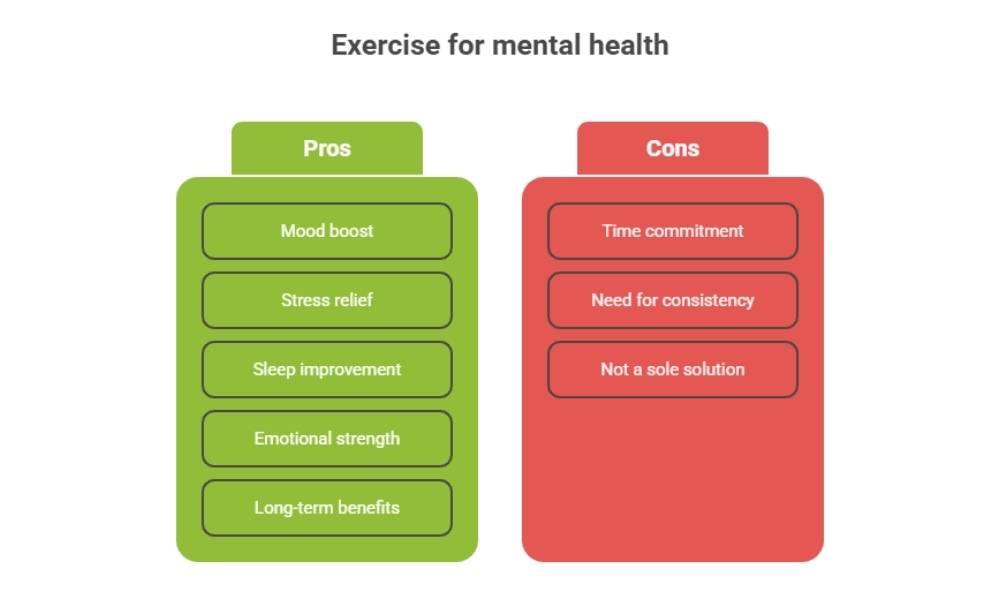
Pros and Cons of Exercise for Mental Health
Practical Tips to Start Exercising for Mental Well-being
Starting exercise does not need to be difficult. Begin with short sessions. Choose activities you enjoy. Focus on routine, not perfection. Track progress gently. Small steps create long-term habits.
How to Stay Consistent Without Pressure
Consistency matters more than intensity. Set realistic goals. Allow rest days. Avoid comparing yourself to others. Listen to your body. Exercise should feel supportive, not stressful.
Real-Life Scenarios
A student uses walking to manage exam stress. An office worker exercises to reduce burnout. A remote worker moves daily to improve focus. In each case, exercise supports mental balance through routine and movement.
When Exercise Alone Is Not Enough
Exercise supports mental health, but it is not a replacement for professional care. If emotional distress feels overwhelming or long-lasting, professional support is important. Exercise works best as part of a balanced mental health plan.
Key Takeaways
Exercise supports mental health in natural and lasting ways. It helps reduce stress, anxiety, and emotional tension. It improves mood, focus, and sleep quality. Consistency matters more than intensity. Exercise works best as part of a balanced lifestyle. Small daily movement creates strong mental stability over time.
Conclusion
Mental health challenges are common in modern life. Stress, low mood, and mental fatigue affect people of all ages. While there is no single solution, exercise remains one of the most effective and accessible tools for mental well-being.
The benefits of exercise on mental health go beyond physical fitness. Movement supports brain function, emotional balance, and stress control. It helps people feel calmer, clearer, and more confident in daily life.
Exercise does not need to be intense or perfect. Gentle movement, done regularly, creates meaningful change. Over time, it builds emotional resilience and mental strength.
When used consistently and combined with healthy habits, exercise becomes a powerful long-term investment in mental well-being.
FAQ
What are the benefits of exercise for mental health?
Exercise helps improve mental health by reducing stress, anxiety, and depression. It improves mood by releasing endorphins, increases self-confidence, sharpens concentration and memory, and helps people sleep better. Regular exercise also supports emotional balance and overall psychological well-being.
What are 5 ways to improve mental health?
Mental health can be improved by exercising regularly, getting enough sleep each day, practicing mindfulness or relaxation techniques, maintaining strong social relationships, and eating a healthy, balanced diet. These habits help manage stress and improve emotional stability.
What are the 10 benefits of exercise?
Exercise improves heart health, strengthens muscles and bones, increases stamina, helps control body weight, boosts energy levels, strengthens the immune system, improves mood, reduces anxiety and depression, enhances brain function, and improves overall quality of life.
Which is an example of a mental benefit of exercise?
A clear mental benefit of exercise is reduced anxiety. Physical activity lowers stress hormones and releases chemicals in the brain that help a person feel calm and relaxed.
Best exercise for mental health
The best exercises for mental health include walking, jogging, yoga, swimming, cycling, dancing, and team sports. These activities help reduce stress, improve mood, and increase social interaction.
How does exercise improve mental health scientifically?
Exercise improves mental health by increasing the release of endorphins and serotonin, which are mood-enhancing chemicals. It also reduces cortisol, improves blood flow to the brain, and supports the growth of new brain cells, improving emotional control and thinking skills.
Exercise and mental health statistics
Research shows that regular exercise can reduce symptoms of depression by around twenty to thirty percent. People who exercise consistently report better mental well-being and lower levels of stress and anxiety.
5 emotional benefits of exercise
Exercise helps reduce stress, improves mood, increases self-esteem, strengthens emotional resilience, and promotes feelings of happiness and relaxation.
Social benefits of exercise
Exercise encourages social interaction, helps build friendships, reduces feelings of loneliness, improves communication skills, and strengthens a sense of community.
Physical benefits of exercise
Exercise improves cardiovascular health, increases muscle strength and flexibility, enhances endurance, improves posture and balance, helps maintain a healthy weight, and reduces the risk of chronic diseases.