
Every May, Mental Health Awareness Month gets attention. Social media posts appear. Companies share messages. People talk more.
But for many who feel stressed, anxious, tired, or burned out, this is not enough.
Mental health problems are often quiet. They may exhibit low energy, irritability, poor focus, or withdrawal from others. These signs can be easily missed or misunderstood.
In the United States, about one in five adults faces a mental health issue each year. The UK, Canada, and Australia show similar numbers. Even with more awareness, many people still avoid getting help because of fear or stigma.
Mental Health Awareness Month aims to change this. It is not about one month of attention. It is about long-term understanding and support.
This article goes beyond awareness. It explains why this month matters, what truly helps mental health, and how people, families, workplaces, and communities can take real action.
What Is Mental Health Awareness Month?
Mental Health Awareness Month happens every May. It began in 1949 to help people understand mental health and get support early.
Goals and Purpose
Over time, its focus has expanded beyond diagnosis to include:
- Emotional well-being
- Stress management
- Resilience building
- Prevention and early intervention
- Access to mental health education and services
A full month gives time to learn, talk, think, and change habits.
Why Mental Health Awareness Month Still Matters Today
Mental health problems are growing worldwide. Modern life brings money stress, too much screen time, loneliness, and work pressure.
Real-World Scenario
A remote worker in Australia meets deadlines but feels lonely and stressed. Mental health is not talked about at work, so the worker keeps going until burnout causes a long leave. Early support could have helped.
This happens often.
Mental Health Awareness Month shows that mental health affects:
- Work performance
- School success
- Physical health
- Family and relationships
- Overall quality of life
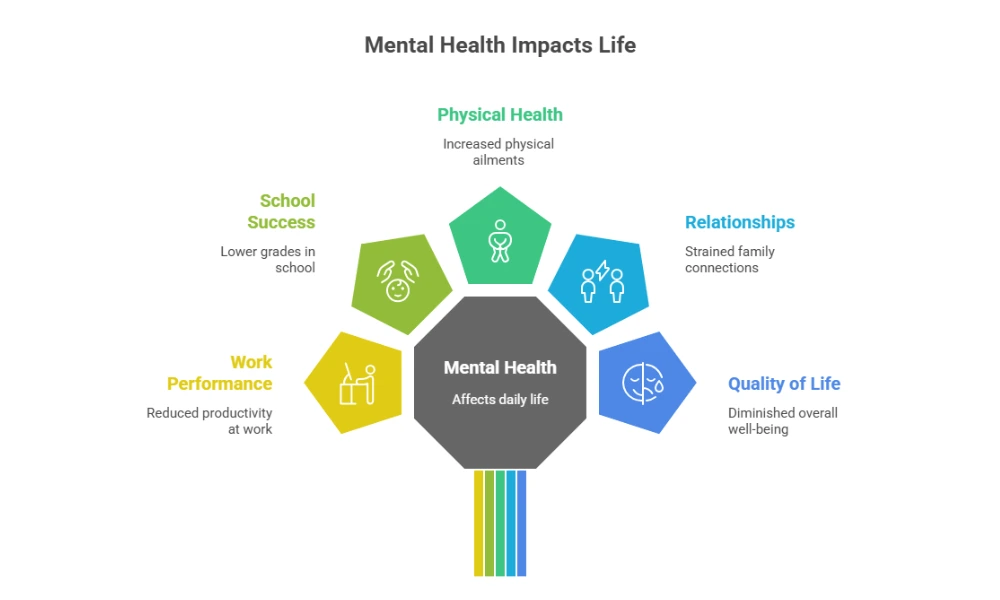
Awareness permits people to talk. Talking early saves time, energy, and emotional health.
Understanding Mental Health Beyond Simple Definitions
Mental health is often misunderstood as either “good” or “bad.” In reality, it exists on a continuum that shifts throughout life.
Key Components of Mental Health
Mental health includes:
- Emotional regulation
- Stress response
- Self-confidence
- Social connection
- Coping skills
A person can appear successful while struggling internally. Awareness helps normalize this reality and reduces judgment.
Common Mental Health Conditions (High-Level Overview)
| Category | Examples |
| Anxiety Disorders | Generalized anxiety, panic disorder |
| Mood Disorders | Depression, bipolar disorder |
| Trauma-Related | PTSD |
| Neurodevelopmental | ADHD |
| Eating Disorders | Binge eating, anorexia |
| Substance-Related | Alcohol or drug dependency |
Understanding these categories reduces fear and replaces myths with facts.
Mental Health Awareness Month vs Everyday Mental Wellness
Comparison Table
| Aspect | Mental Health Awareness Month | Everyday Mental Wellness |
| Purpose | Education & stigma reduction | Daily mental care |
| Timeframe | One month | Year-round |
| Focus | Awareness & advocacy | Habits & coping |
| Impact | Cultural shift | Personal resilience |
True success happens when awareness supports daily mental wellness — not replaces it.
What Actually Improves Mental Health
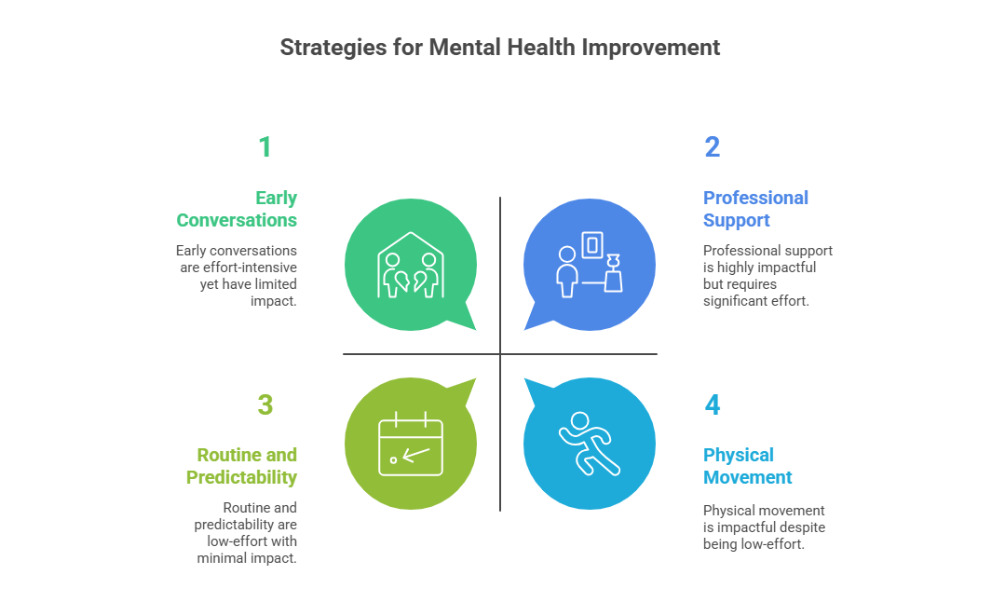
1. Early Conversations Matter More Than Perfect Solutions
Mental health problems often get worse when ignored.
Many people wait until stress feels too heavy before asking for help. Talking early lowers emotional pressure and leads to better results.
A simple question can help:
“How are you coping lately?”
2. Routine and Predictability Reduce Anxiety
Daily structure helps people feel safe, especially during uncertain times.
Helpful routines include:
- Going to sleep and waking up at the same time
- Eating regular meals
- Taking planned breaks
- Setting clear work limits
Routines do not need to be strict. Being consistent matters more than being perfect.
3. Physical Movement Without Pressure
Movement helps mental health, even when it is gentle.
Good options include:
- Walking
- Stretching
- Light yoga
- Easy strength exercises
Extreme workouts are not needed. Pressure around fitness or body image can increase stress.
4. Professional Support Is Preventive, Not a Last Resort
Getting help early can stop problems from becoming serious.
In Tier-1 countries, many people use:
- Short-term counseling
- Stress-management tools
- Cognitive behavioral techniques
Mental health support works best when used early, not only in crisis.
Mental Health Awareness in the Workplace
Work is one of the most significant sources of adult stress.
Why Employers Play a Key Role
Mental health affects:
- Productivity
- Engagement
- Absenteeism
- Employee retention
Real Workplace Example
A U.S. company introduced mental health training for managers and flexible scheduling. Over time, employee satisfaction improved, and burnout rates declined.
Common Workplace Mistakes
- Treating burnout as poor performance
- Offering wellness perks without policy changes
- Ignoring leadership stress
What Effective Workplace Support Looks Like
- Mental health training for managers
- Flexible work options
- Confidential support resources
- Clear communication around expectations
Support must be systemic, not symbolic.
Mental Health Awareness for Parents and Schools
Mental health challenges often begin early, even if they are not recognized immediately.
Why Early Awareness Matters
Children may show distress through:
- Withdrawal
- Irritability
- Declining academic performance
Real-Life Scenario
A teacher notices a student becoming disengaged. Instead of discipline, the school provides counseling support. Over time, confidence and focus return.
How Parents Can Support Mental Well-Being
- Listen without minimizing feelings
- Avoid comparisons
- Encourage balanced routines
- Normalize asking for help
Emotional safety at home builds resilience that lasts into adulthood.
Mental Health Awareness Month and Social Media
Social media can both help and harm mental health.
Positive Impact
- Normalizes conversations
- Shares educational resources
- Builds community
Potential Risks
- Comparison culture
- Oversimplification of mental health
- Performative awareness
Mindful use matters more than constant exposure.
How to Participate in Mental Health Awareness Month Meaningfully
Individual Actions
- Learn reliable mental health information
- Check in with friends and family
- Practice consistent self-care
Community Actions
- Host educational discussions
- Share evidence-based resources
- Support mental health initiatives
Meaningful participation focuses on education and empathy, not visibility.
Pros and Cons of Mental Health Awareness Campaigns
Pros
- Reduces stigma
- Encourages early support
- Improves education
- Influences policy conversations
Cons
- Risk of shallow engagement
- Awareness without action
- Overgeneralization
Balanced campaigns emphasize follow-through.
Key Takeaways
- Mental Health Awareness Month is a starting point
- Early support prevents long-term challenges
- Mental health affects every area of life
- Small habits create sustainable change
- Awareness must lead to action
Conclusion
Mental Health Awareness Month is not about being perfect. It is about moving forward.
When people understand mental health, they take action. This helps others feel safe asking for help and offering support.
The real success of Mental Health Awareness Month is not posts or campaigns. It is everyday conversations that continue after May.
Frequently Asked Questions (FAQs)
1. What is Mental Health Awareness Month about?
Mental Health Awareness Month focuses on educating people about mental health, reducing stigma, and encouraging early support, self-care, and open conversations about emotional well-being.
2. Is October a Mental Health Awareness Month?
October is not officially Mental Health Awareness Month, but it is important because World Mental Health Day is observed on October 10.
3. What are 5 ways to improve mental health?
Five healthy ways include talking to trusted people, getting enough sleep, staying physically active, reducing screen time, and practicing relaxation techniques like deep breathing or journaling.
4. Mental Health Awareness Month in October
October includes major mental health events such as World Mental Health Day, Mental Illness Awareness Week, and Depression Awareness Month.
5. Mental Health Awareness Month in November
November is recognized as Men’s Mental Health Awareness Month, highlighting men’s emotional health and encouraging them to seek help without stigma.
6. Mental Health Awareness Month 2025
Mental Health Awareness Month in 2025 will be observed in May, as it is every year.
7. Mental Health Awareness Month activities
Activities include awareness campaigns, school and workplace programs, webinars, mindfulness sessions, and community wellness events.
8. Mental Health Awareness Month 2025 theme
The official theme for Mental Health Awareness Month 2025 has not yet been announced and is usually released closer to May.
9. Mental Health Awareness Month in September
September is not Mental Health Awareness Month, but it is widely observed as Suicide Prevention Awareness Month.
10. Mental Health Awareness Day
World Mental Health Day is observed every year on October 10 to promote global mental health awareness.